Can Studying the Bible Academically Strengthen your Faith?
By Emma Pierce

Emma Pierce is a brand new student at NashBC. Bringing her love of writing with her, she is diving right in to writing for web!
When I was looking at Bible college, I wondered if it would make sense for me. If I already have access to the Bible, commentaries, podcasts, devotionals, and all the other tools the internet provides, why would I need a formal education in that area? Can studying Scripture in college actually strengthen your faith beyond what you gain through daily Bible reading? Are the results worth all of the time, effort, and money that go into getting a degree in biblical studies?
I’ve found that while your daily personal time in the Word is essential, there are also substantial benefits to studying the Word on an academic level—especially for those considering a career in ministry.
A Bible college provides something beyond access to information. You can learn how to use biblical study tools, make helpful connections with others in the faith, and explore how faith is lived out in different areas of life and work. You can also receive guidance from professors and mentors who value your spiritual growth and well-being.
Learning How to Study the Bible More Deeply
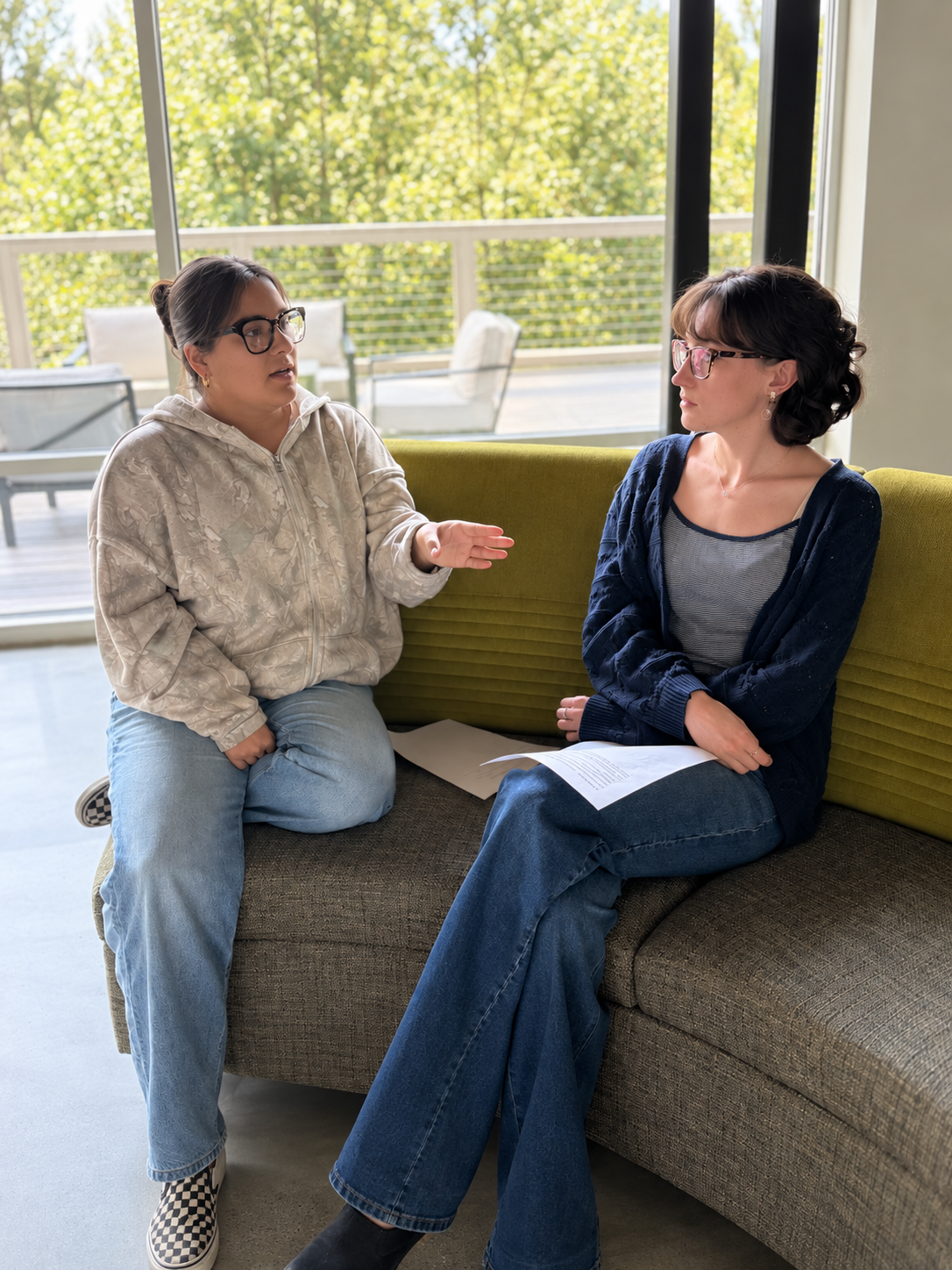
Emma Pierce (Huntsburg, OH) and Deborah (Morristown, TN) discuss the biblical concept of Self Control during a Professional Skills workshop.
A major advantage is the sharpening of analytical skills. It’s simply hard to challenge yourself.
We live in an age when it is increasingly easy to find information that reinforces what we already believe. Learning how to read Scripture by making detailed observations, asking questions, and studying the context in which it was written can open new doors of understanding.
A passage can become clearer when you understand who wrote it, who received it, and what circumstances surrounded it. You begin to notice comparisons, contrasts, and connections throughout Scripture that reveal God's character and how His purposes unfold through the men and women He has called throughout history.
Biblical studies courses may also introduce you to the original languages in which the Bible was written. Studying Hebrew and Greek is not required to understand the central message of Scripture, and we have many reliable English translations. However, learning about the original languages can help students recognize nuances, word choices, and connections that may be less apparent in translation.
How Can Deeper Bible Study Strengthen Your Faith?
So how does all of this knowledge and understanding actually affect your faith?
Imagine that you need someone to watch your child for a day, and two people have volunteered.
The first is a woman you only vaguely know. She is connected to your church, and someone has recommended her as a trustworthy babysitter.
The second is your closest friend. You have known her for years and talk to her almost every day. You have been through struggles together and, through them, learned her character, strengths, flaws, and capabilities. She has babysat for you before and done well.
Which person would you trust to care for your child?
Probably the second—and probably because you know her personally. The first woman may be completely trustworthy, but your confidence in your friend is grounded in years of knowing who she is.
Likewise, the deeper you go into understanding Scripture—even through struggling with it and analyzing it alongside others—and the more you apply what you learn to your life, the more opportunities you have to recognize God's character and faithfulness.
Your confidence in Him can be reinforced as you seek to know who He is. Your faith can grow because you have given it room to be tested and refined.

Nashville Bible College offers courses in person and online (see phone). Our weekly active-learning workshops allow on campus and online students to work together through material when possible.
Pictured; Anthem Bloyer (Ava, MO) and Malachi Aaseby (Nashville, TN).
When Bible Knowledge Becomes the Goal
There are also dangers that come with studying theology at this level.
An obsession with knowledge and analysis can distract a person from the things that truly matter in a relationship with God. It is possible to begin placing confidence in how much you know about the Bible rather than in the God who speaks through it.
In 1 Corinthians 2, Paul contrasts human wisdom with the wisdom of God revealed through the Spirit. His words remind us that intellectual ability alone cannot produce spiritual maturity.
But the answer is not to disregard serious study of Scripture. The problem is not with the Word. The problem is what we can do with knowledge when knowledge itself becomes the goal.
Hebrews 4:12 says, “For the word of God is living and active, sharper than any two-edged sword.”
Academic Bible study should give God's Word greater opportunity to examine and shape us—not simply give us additional information to master. Professors and teachers who have studied Scripture longer than we have can help us notice things we would have missed on our own and challenge assumptions we may never have thought to question.
But we still have to approach Scripture willing to be changed by it.
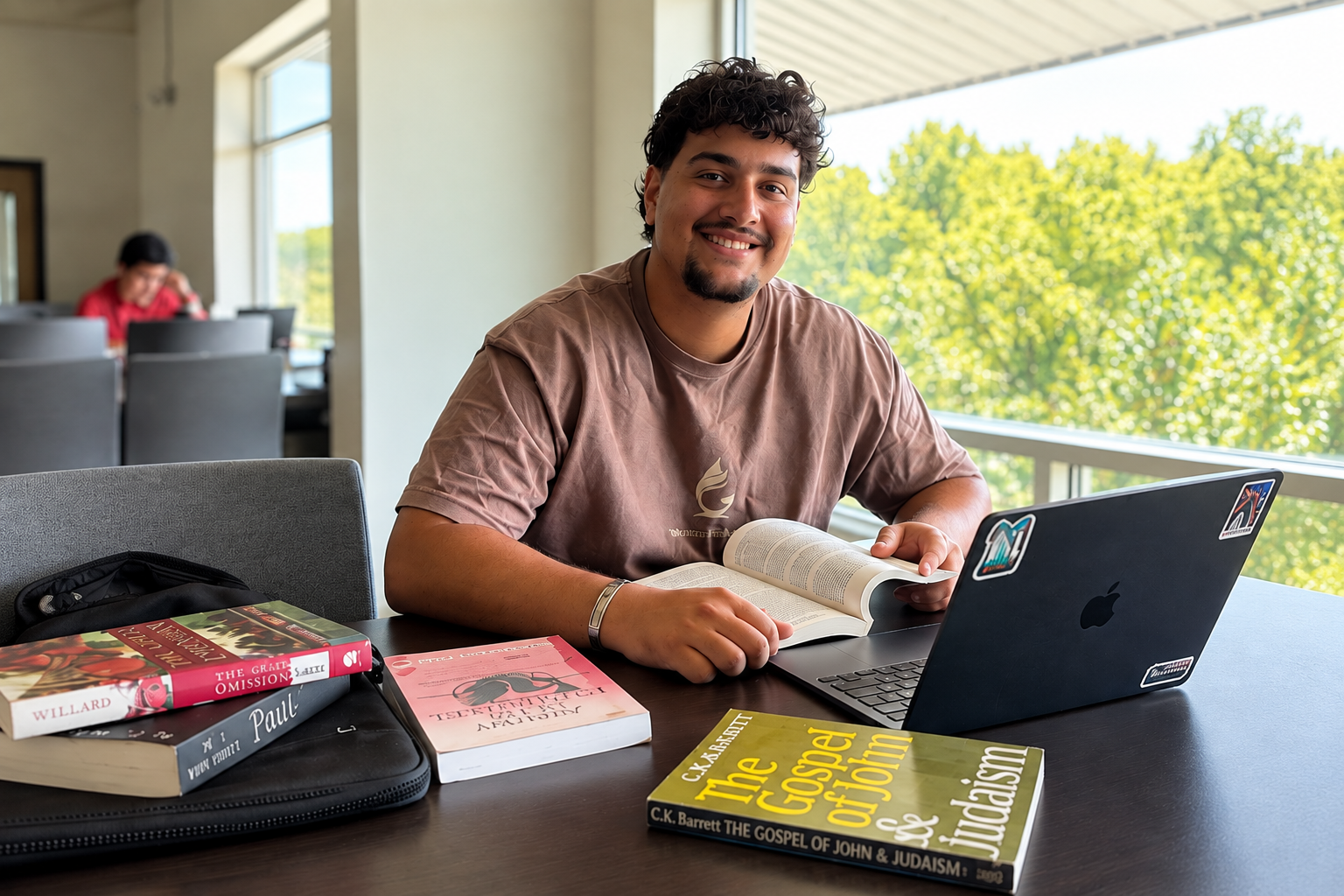
Julian Carrion (Philadelphia, PA), senior, digs deep while working on his John Commentary — an assignment for Gospel of John class, where students write on every chapter of the gospel of John.
Bible Study Should Change How We Live
So, can studying the Bible academically strengthen your faith?
I believe it can.
Through serious study, you can better understand the wisdom, power, and grace of the One in whom you have placed your faith. You can also learn to let faith have its full effect, as James 1 describes, so that you may become mature and complete.
However you decide to study God's Word, remember that we are not simply called to know Scripture. We are called to live by it.
Choose an environment that encourages you to do both.